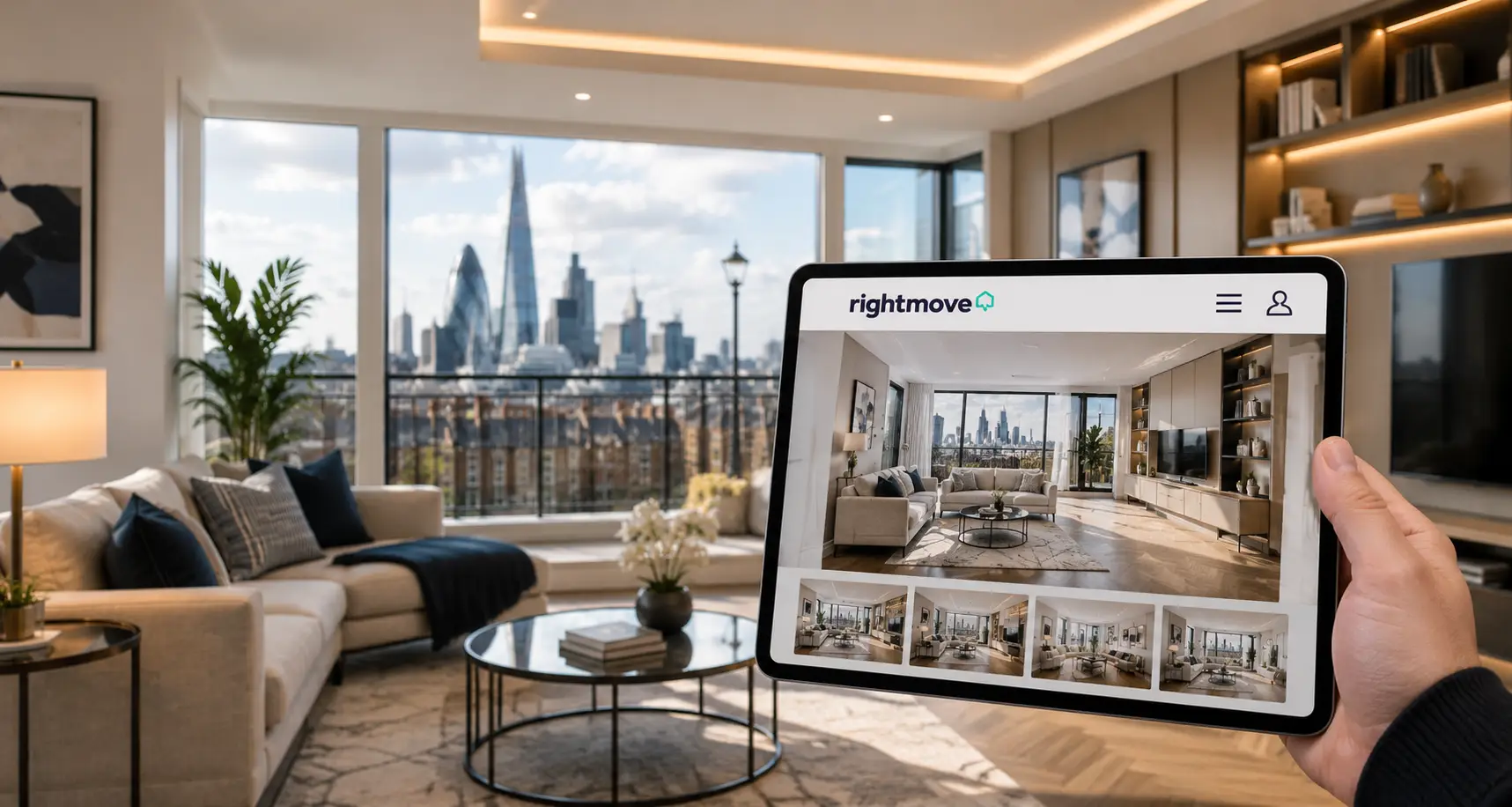
Learn how to create the best Rightmove listing in London with expert photography, videos, and marketing tips that boost enquiries.
Too few photos and buyers scroll straight past, unconvinced there’s enough to see. Too many and engagement drops as the gallery starts to feel padded. Here’s what the data actually says about the ideal photo count — by property type, with guidance on ordering them for maximum impact.
The short answer: 20–30 for most properties
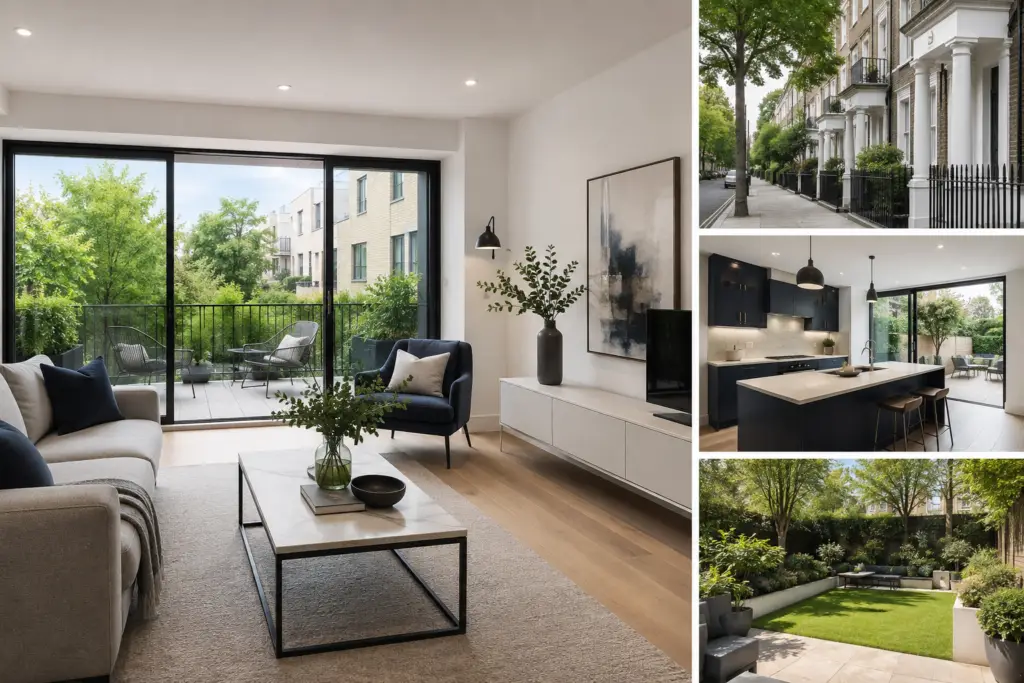
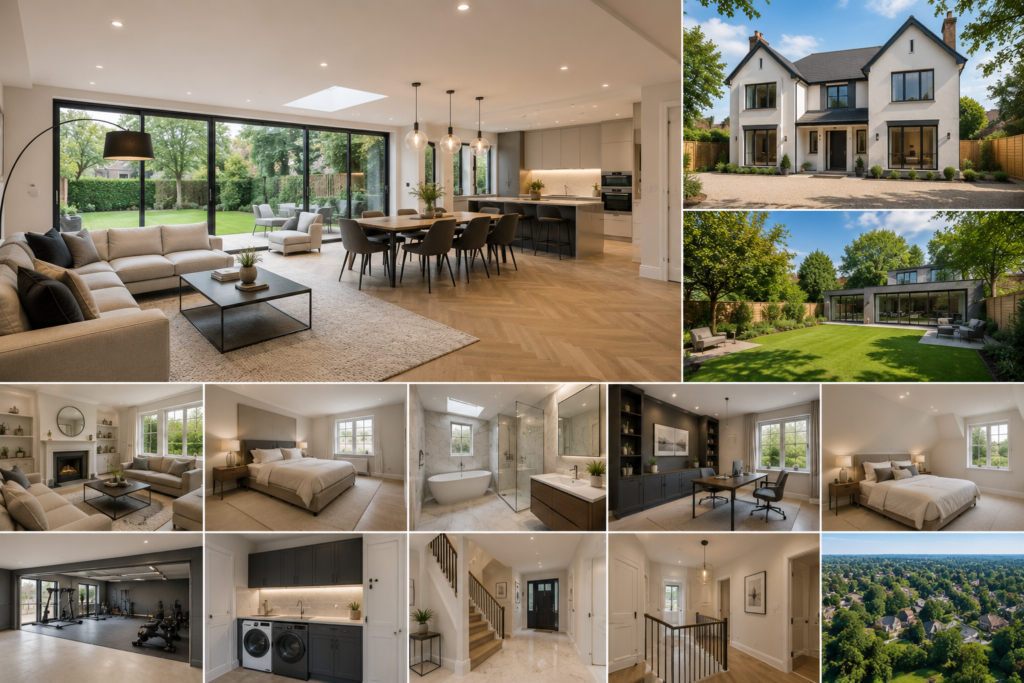
For the vast majority of UK residential listings, the optimal range is 20 to 30 photographs. That’s typically enough to show every room from a flattering angle, plus the exterior, garden, and any standout features — without padding the gallery with repetitive shots that add length but no information.
The exact number depends heavily on property size. A studio flat genuinely doesn’t need 30 photos. A six-bedroom house with a large garden and multiple reception rooms might reasonably need 40. What matters more than hitting a specific number is making sure every photo earns its place in the gallery.
Why the number matters at all
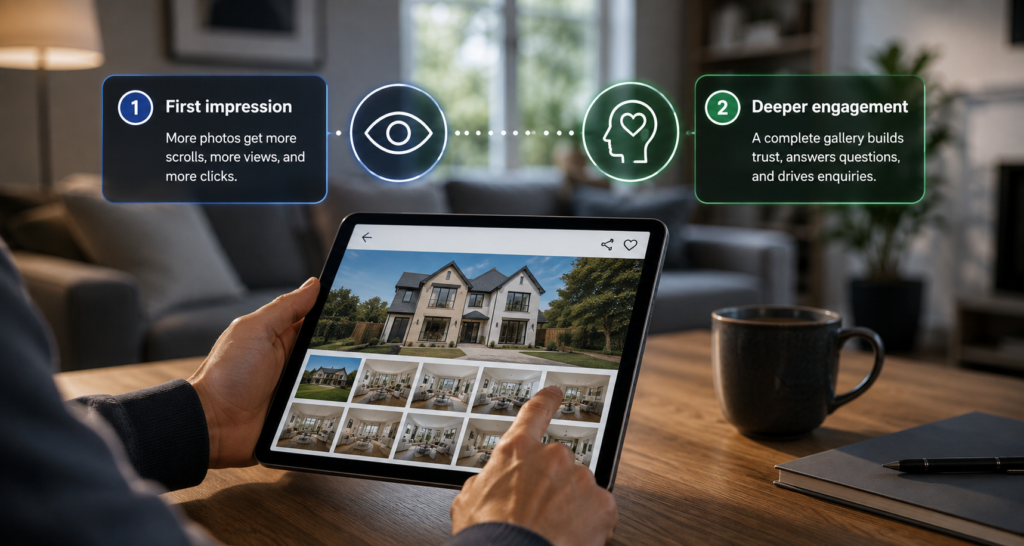
Photo count isn’t just a vanity metric — it directly shapes buyer behaviour at two distinct points in the listing journey.
First, the gallery thumbnail count shown under the cover image on Rightmove’s search results page signals depth of coverage before a buyer even clicks through. A listing showing “3 photos” looks thin and gets scrolled past in favour of listings that visibly show more. Second, once inside the listing, the number and quality of photos determines whether a buyer feels they’ve “seen the property” enough to book a viewing, or whether they’re left with unanswered questions that make them hesitate.
Ideal photo count by property type
Use this as a practical starting point, then adjust based on the property’s actual features — a flat with an unusually good terrace deserves more coverage than a flat without one, regardless of bedroom count.
The test that matters: Before adding a photo to the gallery, ask whether it shows a buyer something they don’t already know from the photos before it. If the answer is no, leave it out — even if you’re still under the target count.
Photo order matters more than total count
Buyer attention drops sharply the further they scroll through a gallery. Most buyers form their impression of a property — and decide whether to keep scrolling — within the first 6 to 8 images. Get the order wrong, and even a great set of 25 photos will underperform a mediocre set of 15 that’s been sequenced well.
1. Strongest single image as cover
A bright, wide-angle shot of the best reception room, or an exterior shot if kerb appeal is the property’s standout feature. This image alone determines click-through from search results.
2. Second-best reception space
Kitchen, dining area, or a different angle of the main living space. Maintain momentum from the cover image — don’t drop to a weaker room too soon.
3. Remaining ground floor rooms
Continue through the strongest remaining spaces — kitchen detail shots, additional reception rooms, hallway if attractive.
4. Master bedroom and main bathroom
The most important upstairs rooms, shown before buyer attention starts to drop. These are typically the second and third most-viewed rooms after the living space.
5. Remaining bedrooms and bathrooms
Cover every habitable room methodically. Group by floor or by logical flow through the property rather than jumping between levels.
6. Garden, exterior, and floor plan
Close with outdoor space and the property’s overall context. The floor plan should be uploaded to Rightmove’s dedicated floor plan field rather than placed at the end of the photo gallery.
Can you have too many photos?
Yes — and it’s a more common mistake than under-photographing. Rightmove allows up to 70 photos per listing, but very few properties genuinely benefit from approaching that limit. Beyond roughly 35–40 well-chosen images, additional photos tend to show diminishing returns.
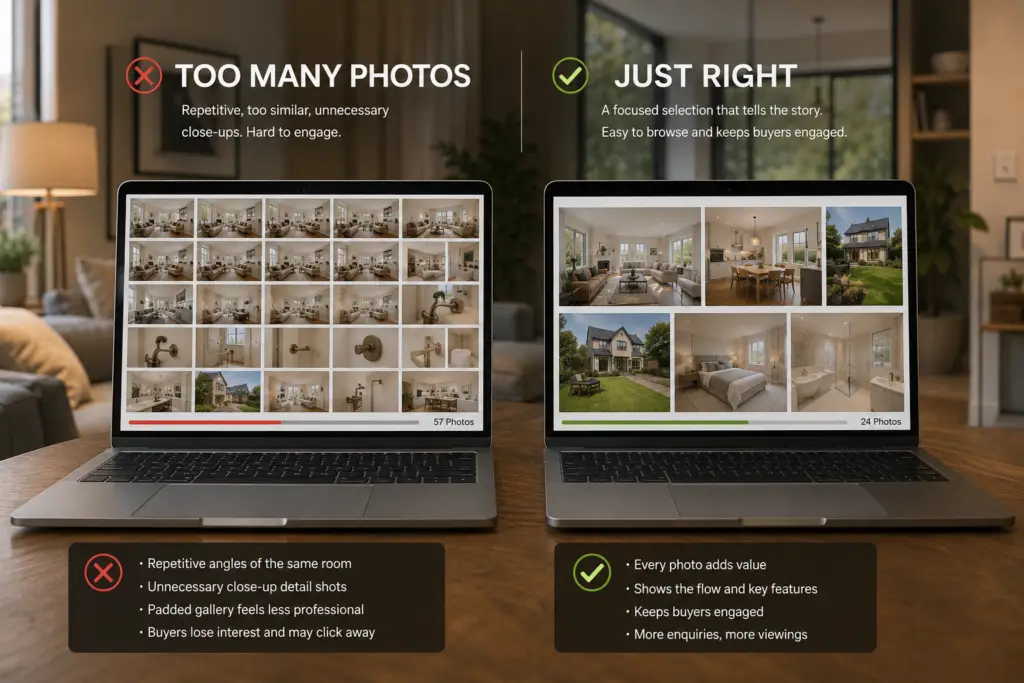
- Multiple near-identical angles of the same room dilute the impact of the best shot rather than adding to it
- Close-up detail shots of fixtures, taps, or door handles rarely add buyer value unless the property is being marketed specifically on its finishes
- A gallery that feels padded can subtly signal that the agent is trying to compensate for something — even if that’s not the intention
- Buyers are more likely to engage fully with a focused 25-image gallery than abandon partway through a 50-image one
The cover photo deserves special attention
If there’s one decision in this entire process worth spending real time on, it’s the cover photo. It appears in Rightmove’s search results before a buyer has clicked into the listing at all — which means it’s working harder than every other photo combined, because it determines whether the rest of the gallery gets seen.
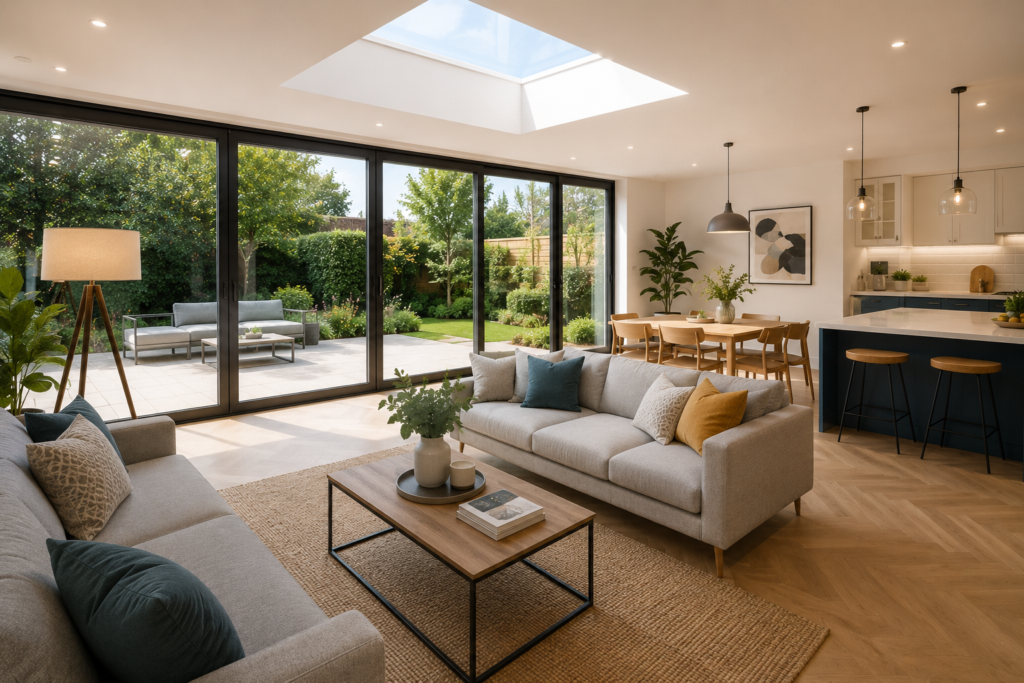
- Choose a bright, naturally lit room — avoid anything shot in dull or overcast conditions
- Wide-angle composition that shows genuine room proportions, not a cropped or tight shot
- For houses with strong kerb appeal, an attractive exterior shot can outperform an interior cover image
- Avoid bedrooms or bathrooms as the cover — reception rooms and kitchens consistently perform best
Frequently asked questions
How many photos should be on a Rightmove listing?
Most properties perform best with 20–30 photos. Smaller properties such as studios and one-bedroom flats can work well with 15–20, while larger family homes above three bedrooms typically need 30–40 to properly cover every room, both interior and exterior. Listings with fewer than 10 photos see significantly lower engagement.
What is the maximum number of photos allowed on Rightmove?
Rightmove allows up to 70 photos per listing. However, the optimum number for buyer engagement is well below this maximum — most well-performing listings use between 20 and 35 images rather than the full allowance.
Which photo should be the cover image on Rightmove?
The cover image should be the single strongest photo in the set — typically a bright, wide-angle shot of the main reception room, or an attractive exterior shot if kerb appeal is the property’s strongest feature. The cover image determines click-through rate from search results more than any other single decision in the listing.
Does the order of photos on Rightmove matter?
Yes, significantly. Buyers scroll through images in order, and engagement drops off the further down the gallery they go. The first 6–8 images should show the strongest rooms and angles, with the floor plan and any garden or exterior shots placed early enough to be seen by buyers who don’t scroll through the full gallery.
Can too many photos hurt a Rightmove listing?
Yes. Beyond around 35–40 images, additional photos tend to show diminishing returns and can even dilute the impact of the strongest shots. Repetitive angles of the same room, or low-value images such as close-ups of fixtures, add length without adding value and can make a listing feel padded.