Drone shoot preparation made simple: our checklist helps estate agents prepare the property, vendors and access so the shoot runs smoothly.
Drone Shoot Preparation: Simple Tips for Estate Agents
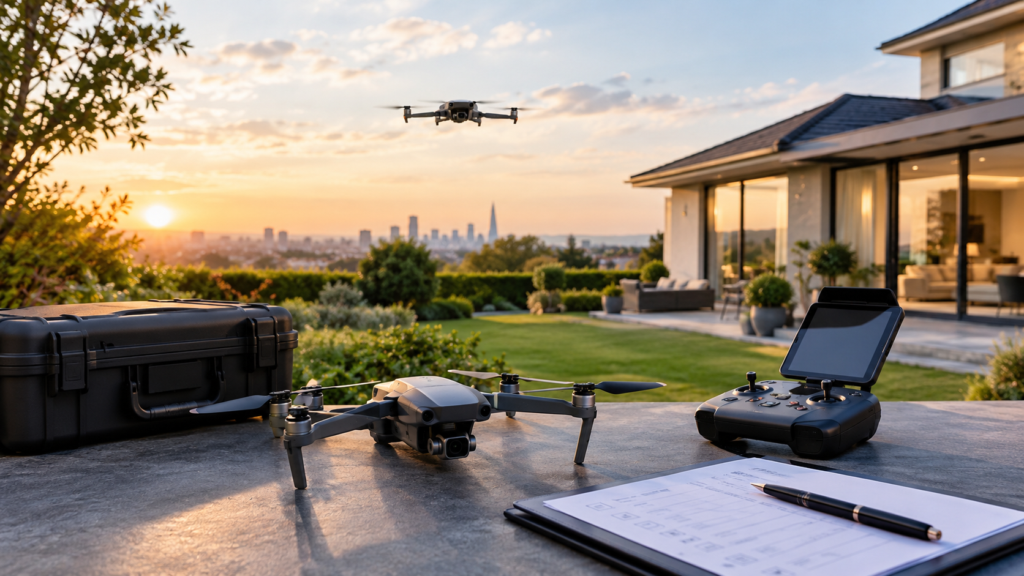
Good drone shoot preparation takes about an hour of your time, yet it can decide whether aerial images flatter a property or highlight every wheelie bin on the street. A pilot can only capture what is in front of the camera, so the clearer the scene and the briefing, the stronger the result. This guide covers what to prepare at the property, what to tell the pilot, and a 48-hour checklist you can reuse on every instruction.
Why Preparation Matters More From Above
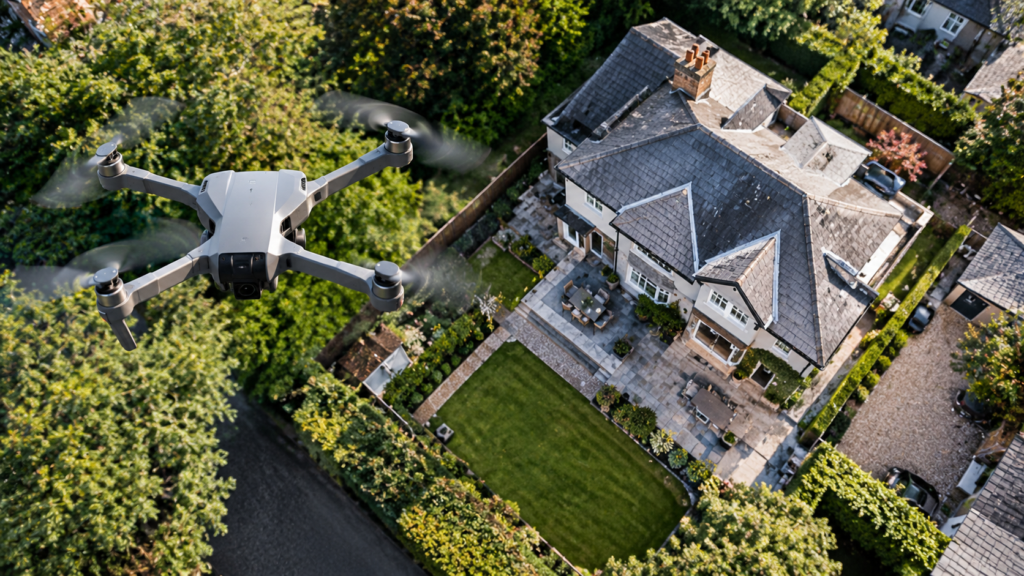
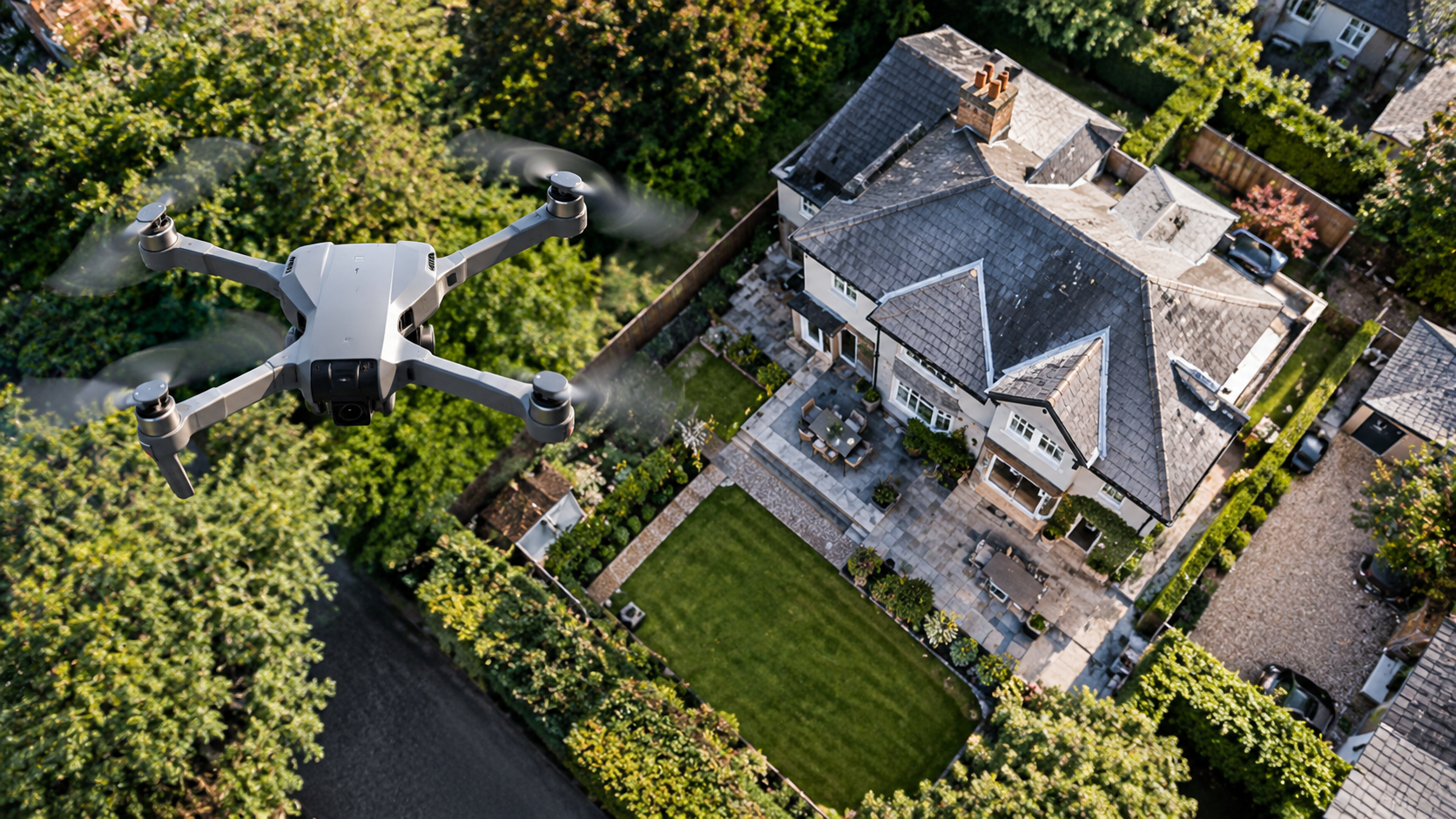
From the ground, a skip or an overgrown border is easy to crop out. From the air, the roof, garden, driveway and neighbouring plots all become part of the picture, and there is nowhere to hide. Because a flight is usually a single visit, there is little chance to retake an image once the pilot has left. Thoughtful drone shoot preparation therefore does far more work than editing ever can.
Drone Shoot Preparation
Start outside, because the exterior is what a drone sees first.
Clear the visible clutter
Walk around the outside as though you were the drone, and look down on everything. Items worth moving or tidying include:
- Wheelie bins and recycling boxes
- Cars that hide the frontage or driveway
- Skips, scaffolding and building materials, where they can be shifted
- Washing lines, children’s toys and mismatched garden furniture
- Hoses, tools and anything else lying across the lawn
Tidy gardens, roofs and terraces
Mow the lawn, sweep patios and roof terraces, and trim any planting that obscures the boundaries. You cannot repair a roof before a shoot, but you can remove loose tarpaulins and debris, and you should tell the pilot about known features such as solar panels or recent works. On a roof terrace, arrange the furniture deliberately, because the viewpoint will show it as a whole.
Think about the light
Find out which elevation faces south, and ask the pilot when that side of the building will be best lit. Strong, directional light usually gives the roofline and landscaping more definition than a flat grey sky. Your pilot can advise on timing, so raise it when you agree the date rather than on the morning itself.
Writing Your Drone Shoot Preparation Brief
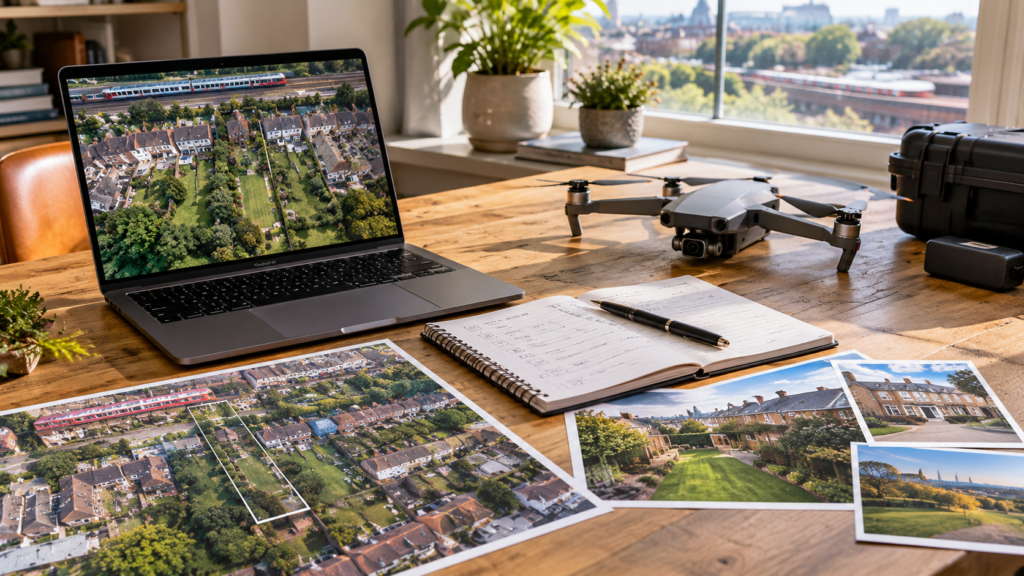
A short written brief saves time on site. Include the following:
- Address and contact: the full postcode and a mobile number for someone who will be present.
- Selling points to show: boundaries, the length of the garden, the walk to the station, or the park at the end of the road.
- Access: gate codes, side access and where the pilot may launch from.
- Constraints: nearby building works, shared driveways or neighbours who need notice.
- Priority image: the single view that should lead the portal listing.
Consider a Victorian terrace in south London. The best aerial image might show the long rear garden and the rail station beyond, so the brief should say so. Without it, the pilot might spend the flight on the front elevation, which a ground-level photographer will already have covered.
Coordinating Vendors, Tenants and Neighbours
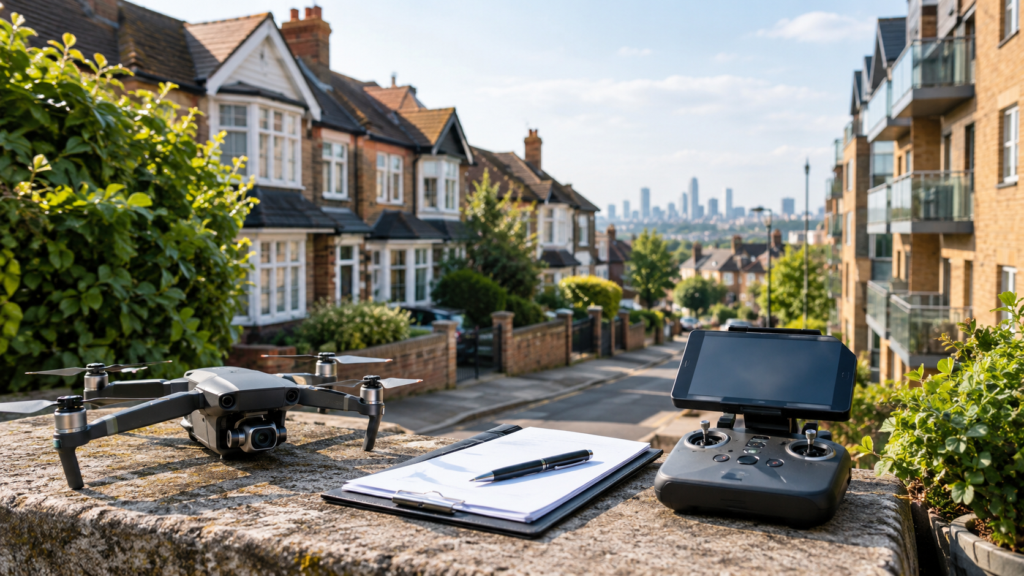
Tell occupants the date and approximate time, and ask them to keep pets indoors, since a drone can be noisy and unsettling for animals. If the property is let, give tenants proper notice and check what the tenancy agreement requires. A courteous note to immediate neighbours also helps, especially in semi-detached and terraced streets where the aircraft will be visible and audible.
For flats, speak to the managing agent early, because roofs, communal gardens and forecourts are rarely the vendor’s to grant. On development sites, contact the site manager about hoarding, working hours, inductions and protective equipment. The pilot will decide on a safe launch area, so make sure everyone else stays well clear while the aircraft is in the air.
Your 48-Hour Checklist
Use this drone shoot preparation routine as soon as the date is agreed:
- Confirm permission from whoever controls the take-off and landing area.
- Send the written brief and the on-site contact details.
- Notify occupants, tenants and neighbours.
- Ask for cars, bins and skips to be moved.
- The day before, walk the exterior and tidy what you find.
- On the morning, unlock gates, check access and keep pets indoors.
- Agree a fallback date in case conditions rule out a flight.
If you would rather hand the logistics to specialists, a professional drone shoot for your next listing includes advance airspace checks, so your own brief can stay short and focused.
Frequently Asked Questions
How far ahead should I plan a shoot?
Start as soon as the instruction is confirmed. Several days gives time for tidying, notifications and any permissions, although the exact lead time depends on the location.
Does the vendor need to be at home?
Not necessarily, but someone should provide access and know the pilot is on site. A named contact avoids confusion and keeps neighbours informed.
What if a neighbour objects?
Stay polite, explain what is happening and let the pilot keep the aircraft away from their property. A quick conversation usually resolves it.
Conclusion
Strong aerial images begin on the ground. Clear the exterior, brief the pilot on what sells the property, and tell the right people in advance. With solid drone shoot preparation, every flight is more efficient and every image more useful. Add the 48-hour checklist to your instruction process and you will notice the difference on your next listing.